Functions
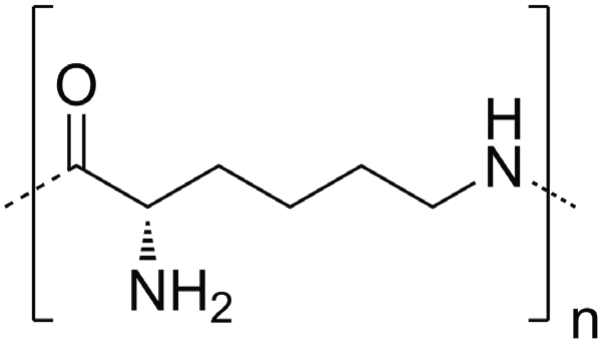
Polylysine is a homo-polypeptide composed of about 23-30 residues of the essential amino acid lysine and is characterized by high chemical stability. Polylysine is obtained by bacterial fermentation and exists in two main forms: α-polylysine (α-PL) and ε-polylysine (ε-PL) (Figure 1). The latter is particularly interesting for its antibacterial properties, making it a safe and effective ingredient in various applications. Thanks to its structure, it shows good water solubility and a high safety profile, making it well tolerated even for the most sensitive skin.
ε-polylysine has a selective antimicrobial action, effective against Gram-positive bacteria such as Staphylococcus aureus and Cutibacterium acnes. Its mechanism of action is based on three main steps:
Fase 1. Interaction with the bacterial wall
Fase 2. Damage to the cell membrane
Fase 3. Inhibition of bacterial metabolism
The selective action of polylysine makes it possible to target specific pathogenic strains without significantly altering the composition of the skin microbiota.
Dermatological applications
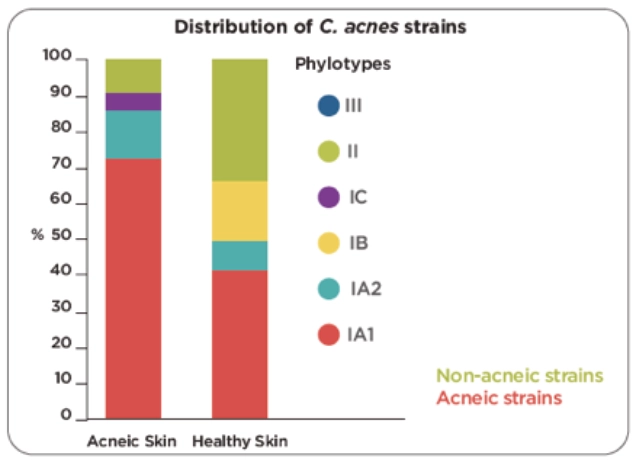
Recent studies have highlighted the role of polylysine in rebalancing the skin microbiota, with particular effectiveness in the treatment of acne-prone skin. Cutibacterium acnes (C. acnes), the main bacterium involved in acne, is a commensal microorganism that can become pathogenic under certain conditions. Using advanced metagenomics technology, the researchers revealed that C. acnes is a family of different subgroups of phylotypes that includes various types of ‘acneic’ and ‘non-acneic’ strains. In particular, skin microbiota of acne-prone skin is characterized by a predominance of acne strains of C. acnes (IA1) at the expense of non-acne strains (II), compared to normal skin (Figure 2).
ε-polylysine acts selectively on the IA1 phylotype of C. acnes, known for its association with the formation of acne lesions. An in vivo study showed that the application of a cream containing 0.0002% (2 ppm) of polylysine for 28 days led to the selective inhibition of the IA1 phylotype of C. acnes, favoring beneficial strains, resulting in reduced sebum production and decreased pimples and blackheads.
By regulating the skin microbiota, polylysine not only helps reduce skin inflammation, but also acts on hyperkeratosis and sebum production. These complementary and synergistic actions make it an ideal ingredient for the treatment of acne-prone skin (Figure 3).
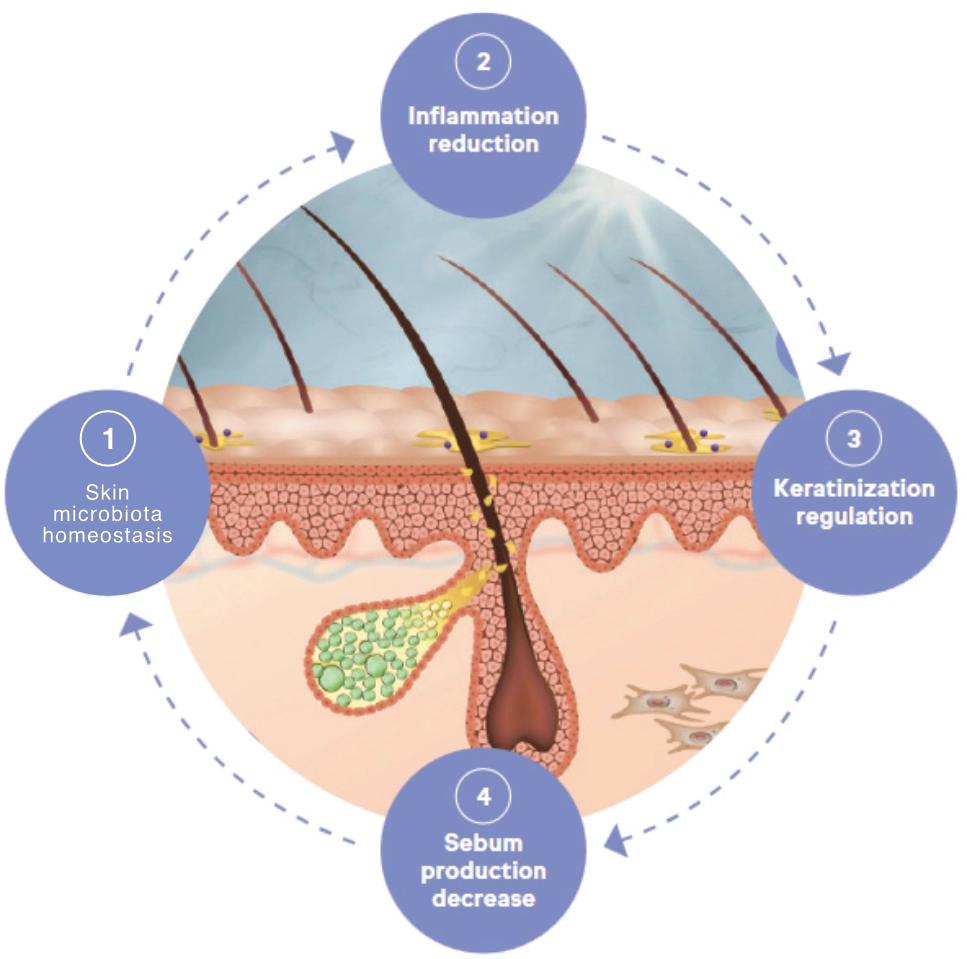
Thanks to its targeted mechanism of action and its high skin tolerability, polylysine is an innovative ingredient for targeted dermatological treatments, with applications in formulations for impure, acne-prone and sensitive skin. Its ability to maintain the balance of the microbiota, selectively counteracting opportunistic bacteria without altering the beneficial flora, makes it a valuable resource for advanced dermocosmetics.